
In today’s digital era, data is generated at an unprecedented rate. Traditional centralized cloud computing architectures are often challenged by the need for real-time processing and ultra-low latency. This is where edge computing comes into play—a transformative technology that shifts computation and data storage closer to the data sources. In this blog post, we’ll delve into what edge computing is, why it matters, its various applications, the benefits it offers, and the challenges it faces. We’ll also explore future trends and the potential impact on industries worldwide.
What Is Edge Computing?
Definition and Core Concept
At its core, edge computing is a distributed computing paradigm that brings computation and data storage closer to where it is needed. Instead of sending all the data to a centralized cloud server, edge computing processes data locally on the “edge” of the network. This can include processing on sensors, local gateways, or micro data centers. The primary goal is to reduce latency—the time delay between data generation and processing—thereby delivering faster, more efficient services.
Edge computing enhances performance, security, and the capability to manipulate and study information at or close to the beginning, making it a treasured addition to the broader cloud computing atmosphere.
Edge vs. Cloud Computing
While traditional cloud computing serves as the backbone for processing and storing large volumes of data, its centralized model can become a bottleneck with the exponential growth of Internet of Things (IoT) devices and the rising demand for real-time analytics. In contrast, edge computing decentralizes the workload so that critical tasks—such as data filtering, aggregation, and analysis—occur near the data source.
The Evolution of Edge Computing
Historical Context and Early Models
The concept of edge computing is not entirely new. Its roots can be traced back to earlier distributed computing models and content delivery networks (CDNs) designed to bring data closer to users.
Driving Forces Behind Modern Edge Computing
Modern edge computing has evolved due to:
- Exponential IoT Growth: Billions of connected devices generate data continuously.
- Advancements in Microprocessors: More powerful, compact devices enable on-site data processing.
- 5G Network Deployment: Higher speeds and lower latencies fuel real-time applications.
How Edge Computing Works
The Multi-Layered Architecture
Edge computing architecture is built on a multi-layered model that ensures optimal workload distribution:
- Edge Device: The sensor or IoT device (e.g., cameras, industrial machines, wearables) that generates data.
- Edge Gateway: Intermediary devices that perform initial data filtering and processing.
- Local Edge Server/Micro Data Center: Aggregates data from multiple devices, processes it locally, and forwards only essential insights to the cloud.
- Central Cloud: Handles heavy computational tasks, long-term storage, and advanced analytics.
This hierarchical design minimizes latency and reduces the load on centralized servers.
Real-World Applications of Edge Computing
Transforming Industry Operations
Edge computing is revolutionizing how industries operate by enabling real-time responsiveness and localized data processing. Key applications include:
Healthcare
- Real-Time Patient Monitoring: Wearable devices process vital sign data instantly, alerting healthcare providers to anomalies.
- Improved Data Privacy: Processing sensitive medical data locally enhances security and complies with privacy regulations.
Autonomous Vehicles
- Immediate Decision Making: Self-driving cars use edge computing to process sensor data (from cameras, LiDAR, radar) almost instantaneously, ensuring safe navigation without reliance on remote cloud connectivity.
Industrial Automation
- Predictive Maintenance: Machines analyze operational data in real time to predict failures before they occur, reducing downtime.
- Enhanced Efficiency: Real-time processing on the factory floor optimizes production and minimizes waste.
Smart Cities
- Traffic and Environmental Management: Edge-enabled sensors in smart cities can analyze data from traffic cameras and environmental monitors, enabling swift responses to emergencies and efficient resource allocation.
Benefits of Edge Computing
Lower Latency and Faster Response Times
Processing data near its source drastically reduces latency—critical for applications where split-second decisions are essential.
Bandwidth Savings and Cost Reduction
By filtering and processing data locally, edge computing minimizes the amount of data sent to the cloud, saving on bandwidth and reducing overall transmission costs.
Enhanced Security and Privacy
Local data processing reduces exposure to external threats and aids in compliance with data privacy regulations by keeping sensitive information on-site.
Reliability and Scalability
A distributed edge architecture ensures that applications remain operational even during network outages. Furthermore, as IoT devices proliferate, the workload can be scaled by adding more edge nodes.
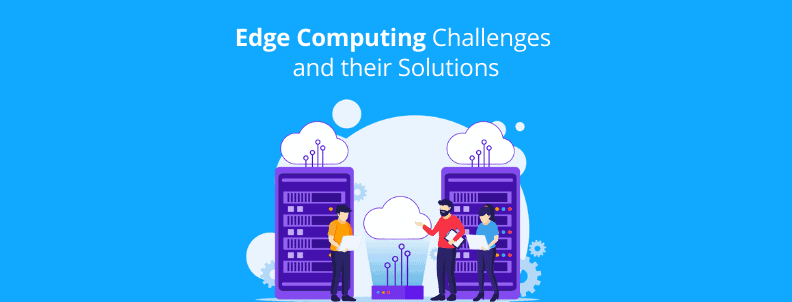
Edge Computing Challenges and their solutions
Security Vulnerabilities
Although processing data locally can enhance security, the distributed nature of edge computing introduces more endpoints, which can be targets for cyberattacks. Securing these resource-constrained devices remains an ongoing challenge.
Solution - The solution is to offload heavy security functions from resource‐constrained devices to dedicated edge gateways or IoT proxies that implement lightweight, robust encryption and authentication protocols, leverage hardware-based security accelerators (like TPMs) to handle cryptographic tasks efficiently, and use dynamic trust management along with real-time anomaly detection via machine learning—thereby reducing the processing burden on individual devices while ensuring secure, end-to-end communication across the distributed network.
Complexity in Management
Managing a network of diverse edge devices requires robust monitoring and maintenance strategies. The heterogeneity of hardware and software platforms can complicate unified management.
Solution - A solution to managing a diverse network of edge devices is to implement orchestration platforms like Kubernetes or specialized edge orchestration frameworks that unify hardware and software management. These platforms allow centralized monitoring, automated updates and remote configuration using standardized APIs and tools, simplifying diagnostics and policy enforcement across heterogenous devices while reducing management complexity.
Interoperability Issues
Ensuring seamless communication and data exchange between different edge devices, gateways, and cloud platforms is critical. Industry-wide standards are still evolving to address these interoperability challenges.
Solution - To address interoperability challenges among diverse edge devices, gateways, and cloud platforms, adopting industry-wide standards like the Matter protocol can facilitate seamless communication and data exchange, as it enhances interoperability among smart home IoT devices.
Upfront Costs and Investment
Initial investments in edge infrastructure—such as deploying local processing units and establishing secure networks—can be high, which may be a barrier for smaller organizations.
Solution - To mitigate the high initial costs of deploying edge infrastructure, smaller organizations can consider adopting Edge-as-a-Service (EaaS) models, which allow them to utilize edge computing capabilities on a pay-as-you-go basis, thereby reducing the need for substantial upfront investments. Additionally, leveraging cost-effective hardware solutions, such as mini PCs, can serve as efficient edge devices with lower initial expenses.
Careers in Edge Computing: Jobs, Salaries, and Skills
As edge computing continues to transform industries worldwide, the demand for skilled professionals in this field is growing rapidly. Whether you’re just starting out or looking to advance your career, understanding the job landscape in edge computing can help you make informed decisions. In this section, we explore the diverse career opportunities, salary ranges, essential skills, educational requirements, and certifications that can give you an edge (pun intended) in this emerging field.
Job Roles in Edge Computing
Edge computing professionals work on deploying, managing, and optimising distributed computing systems that process data near its source. Common roles include:
- Edge Computing Developer/Engineer:
Focus on building and deploying software applications that run on edge devices and gateways. - Edge Solutions Architect:
Design comprehensive architectures that integrate edge nodes with central cloud systems, ensuring efficient data processing and low latency. - IoT Specialist:
Manage networks of sensors and devices, implementing data filtering, aggregation, and real-time analytics at the edge. - Edge Analytics Engineer:
Develop and deploy machine learning and data analytics models on edge devices to extract actionable insights in real time. - Edge Security Analyst:
Implement robust security protocols to protect distributed endpoints and ensure data privacy and regulatory compliance. - Technical Consultant or Manager:
Provide strategic guidance and leadership on edge computing projects, managing teams and bridging the gap between technology and business requirements.
These roles vary from entry-level to senior management positions, giving you ample opportunities to grow based on your experience and interests.

Salary Expectations
Salary levels for edge computing professionals can vary widely depending on the role, experience, and geographic location. Here’s a general breakdown:
- Entry-Level Positions:
Salary Range: Approximately $70,000 – $90,000 per year.
Roles such as junior edge developers or IoT assistants typically start within this range. - Mid-Level Positions:
Salary Range: Approximately $90,000 – $120,000 per year.
Edge Computing Specialists or Edge Analytics Engineers with 3–5 years of experience fall into this category. - Senior Positions:
Salary Range: Approximately $120,000 – $160,000+ per year.
Senior Edge Solutions Architects, senior edge engineers, or managerial roles often command higher salaries due to their advanced skills and leadership responsibilities. - Highly Specialised Roles:
Salary Range: $160,000 – $200,000+ per year.
Roles that integrate edge computing with advanced AI, cloud strategy, or that require significant leadership (e.g., Chief Edge Officer) are positioned at the upper end of the spectrum.
Salary data varies by region; major tech hubs such as San Francisco, New York, and international markets often offer higher compensation compared to smaller cities.
The Intersection of Edge Computing and Emerging Technologies
Artificial Intelligence and Machine Learning
Integrating AI/ML at the edge enables devices to make intelligent decisions in real time without relying on the cloud. This synergy is essential for applications like anomaly detection in autonomous vehicles or personalized health monitoring.
5G Networks
The rollout of 5G networks enhances edge computing by providing higher bandwidth and lower latency, which is pivotal for time-sensitive applications like augmented reality and remote surgery.
Internet of Things (IoT)
IoT devices are the primary data generators in an edge computing ecosystem. As their numbers increase, processing data locally becomes crucial to manage the sheer volume of information efficiently.
Future Trends and Predictions
Decentralized AI
The convergence of edge computing and AI is paving the way for decentralized AI architectures, distributing intelligent decision-making across multiple devices.
Enhanced Security Protocols
Future developments will likely focus on bolstering security measures at the edge, including advanced encryption, multi-factor authentication, and robust access controls.
Standardization and Interoperability
Industry consortia and standards bodies are working to establish common protocols and frameworks, which will drive broader adoption and seamless integration of edge computing solutions.
Edge-as-a-Service
The rise of managed edge computing services will enable organizations to leverage the benefits of edge processing without the heavy initial investment, making it accessible to businesses of all sizes.
Conclusion
Edge computing represents a significant shift in how we process and manage data. By decentralizing computation, it offers lower latency, enhanced security, and improved operational efficiency—critical factors for modern businesses and IoT-driven applications. As emerging technologies like AI, 5G, and IoT continue to evolve, edge computing will become an indispensable component of the digital ecosystem. Whether you’re a startup or a large enterprise, understanding and leveraging edge computing is essential to stay ahead in today’s competitive landscape.
Embrace the future of distributed data processing and position your organization for innovation and success in a rapidly evolving digital world.
Thanks for reading!
Comments
Post a Comment